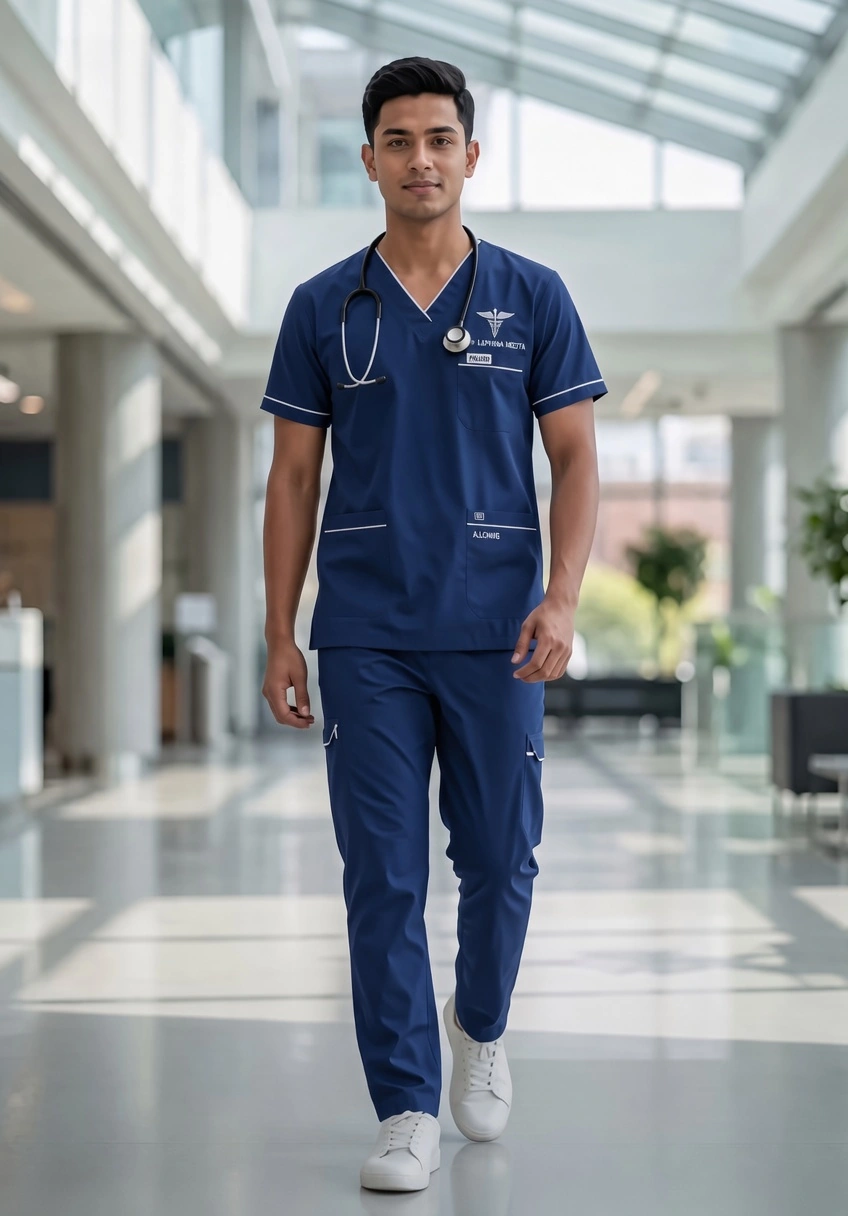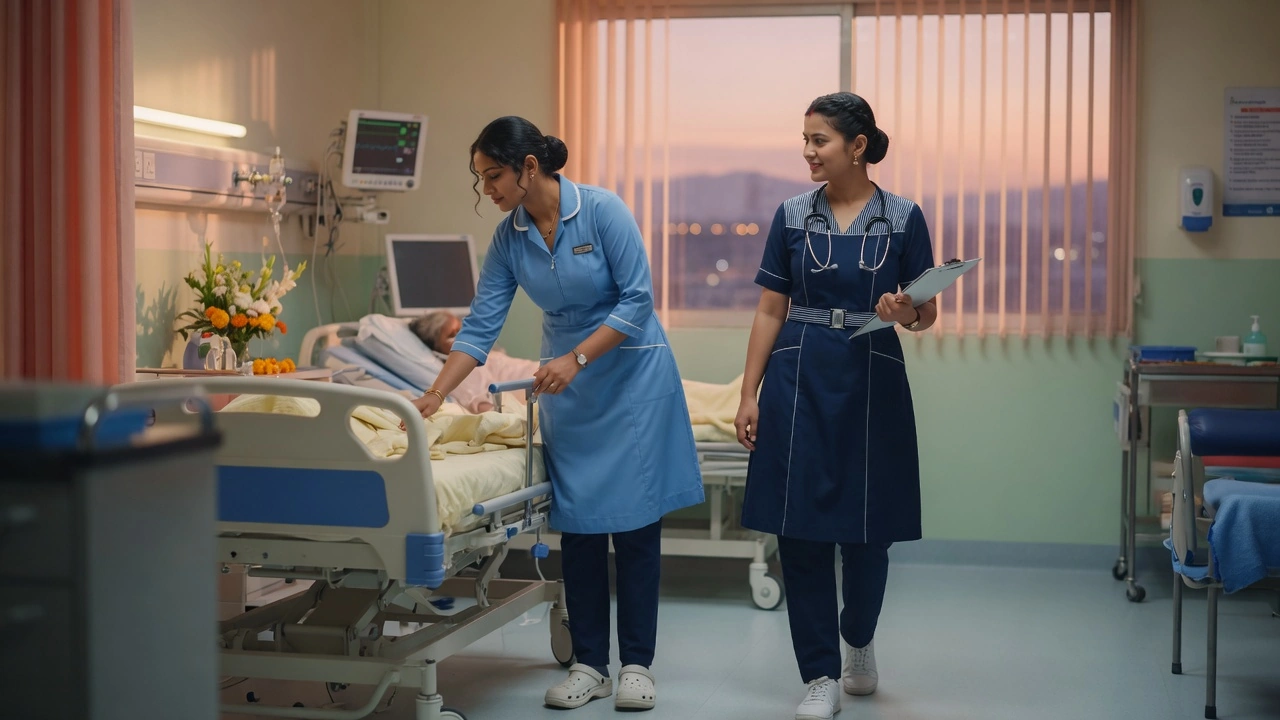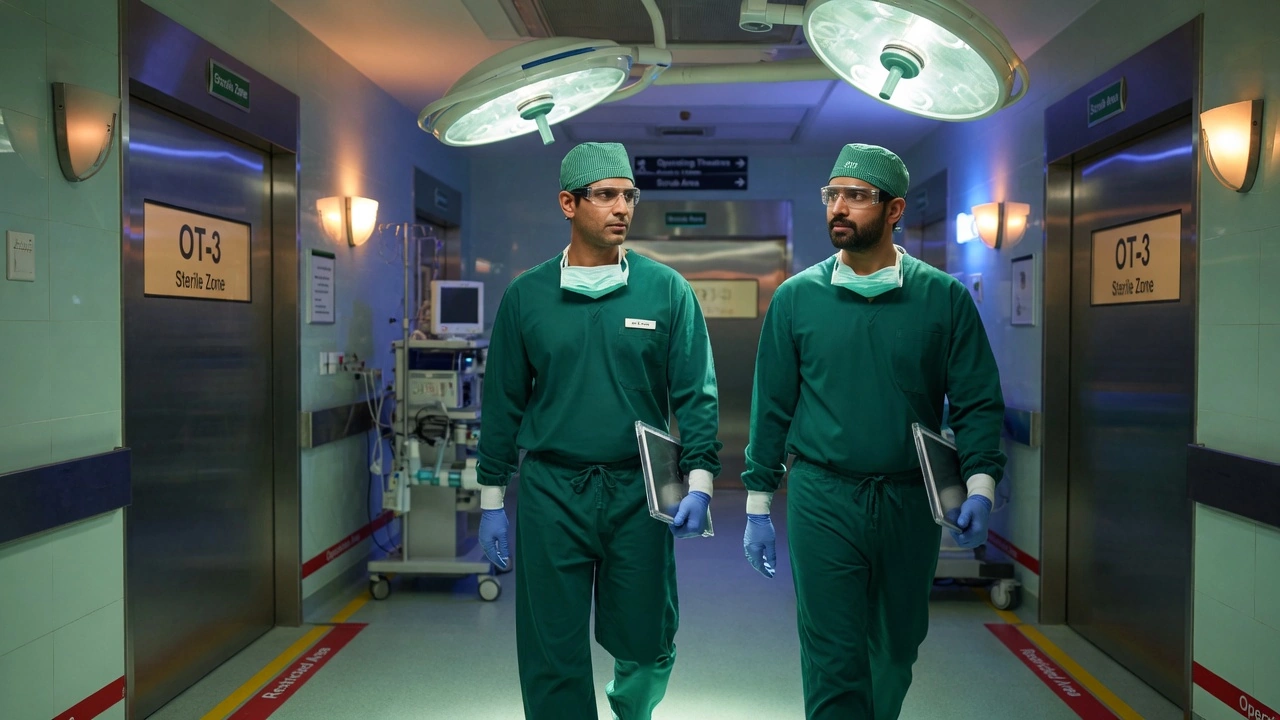
An OT uniform has to do three things at once: stay comfortable during long procedures, move without restriction, and look consistent across the surgical team.
The neckline is a good example. A V-neck that is too deep gaps when the surgeon leans forward. Too high and it feels restrictive. We test the neckline on a person in a leaning posture, not standing straight.
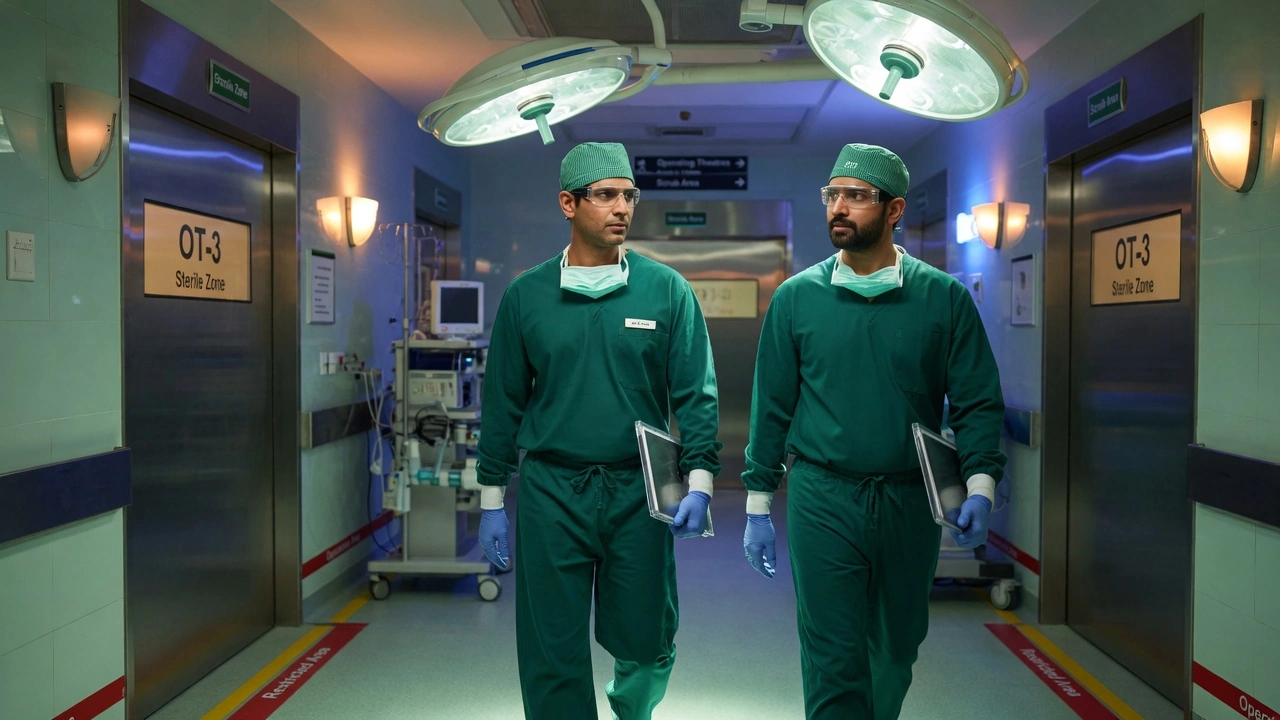
Sleeves and cuffs get similar attention. A cuff that is too tight leaves marks. Too loose and it catches on equipment. We keep a clean, close cuff with enough give to push up once.
Fabric has to handle frequent washing and still hold colour. OT greens and blues fade visibly if the dye is weak, and a faded set looks unprofessional under OT lights.
We also consider how the uniform behaves under a gown. Excess fabric at the waist bunches. A slightly trimmer body keeps the silhouette clean without feeling tight.
None of these details show up in a product photo. They show up at hour four of a long surgery.